The institute is in Laxmi Nagar. E-56, a few minutes from the Metro station, which for students living here means the commute is not a factor in the decision at all — and that turns out to matter more than it sounds.
Why Laxmi Nagar produces so many accounting students
Laxmi Nagar is one of the densest concentrations of small traders, wholesalers, distributors and professional offices in East Delhi. Every one of those businesses keeps books. Most of them keep those books badly, or pay someone outside to keep them, because the person who could do it properly in-house does not exist on the payroll.
That is the gap the Diploma in Financial Accounting is aimed at, and in Laxmi Nagar it is not an abstract one. Students on this course regularly find that the first set of real accounts they touch belongs to a business on a street they already walk down. The proximity cuts both ways — it also means the local market knows the difference between someone who has done a twelve-month diploma and someone who has done a six-week certificate.
What the twelve months actually cover
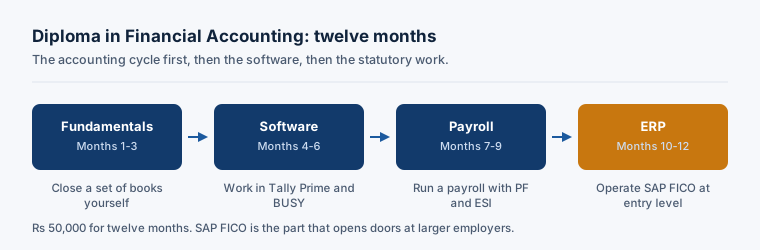
The DFA is a full financial accounting qualification rather than a software course with an accounting label on it. It runs twelve months and covers the accounting cycle end to end, payroll including PF and ESI returns, and four packages: Tally Prime, BUSY, SAP FICO and MS Excel.
SAP FICO is the component that distinguishes it from most of what is sold locally. It is also the component students underestimate — it is the one that opens doors at companies large enough to run an ERP, which is where the salary difference sits.
Entry is open after 12th or after a B.Com, and both commerce and non-commerce backgrounds are accepted. Full details are on the Diploma in Financial Accounting course page.
Fee
Rs 60,000 covers the twelve months in full: tuition, training on all four packages, the payroll and returns practice, and the institute diploma once the online examination is passed. Ask about instalments at enquiry rather than assuming either way.
Who in Laxmi Nagar this suits — and who it does not
It suits someone who wants to be the person a business trusts with its books, not the person who enters vouchers. That is a twelve-month proposition and there is no shorter honest version of it.
It does not suit you if what you actually need is Tally alone for a job you have already been offered. That is a shorter, cheaper course and paying Rs 60,000 for it would be a waste — see whether a Tally course is enough on its own before you decide.
One warning specific to living close by. Students who live five minutes away attend less reliably than students who travel forty. The journey imposes a decision every morning; proximity removes it, and the attendance slips quietly. A twelve-month course is won on turning up in month eight, not on enthusiasm in month one.
Common questions from Laxmi Nagar
Is the diploma recognised?
It is an institute diploma awarded after an online examination. It is not a university degree and is not presented as one. What carries weight with local employers is the practical work behind it, which is why the course is built around live software rather than theory.
Can I do this alongside a job in Laxmi Nagar?
Many students do. The course runs six days a week in defined slots, so it depends entirely on which slot your working hours leave free. Ask about the current batches before committing.
I have no commerce background. Can I still join?
Yes. Both commerce and non-commerce students are accepted, and starting without a commerce background is more common than people expect. We have written about what that actually involves.
Is this better than a B.Com?
It is not a substitute for a degree and does not try to be. It teaches what a B.Com generally does not: the software and the filings. Our guide on what to do after B.Com covers how the two fit together.