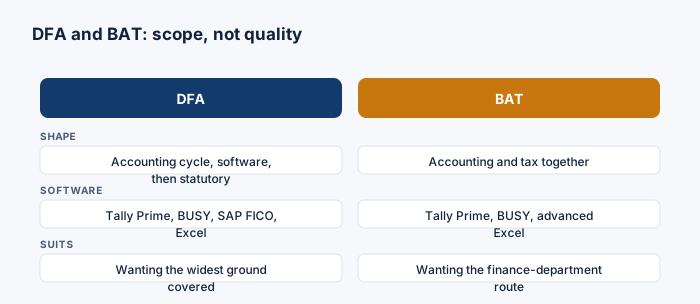
These are the two most substantial courses NIMB runs, twelve months for DFA and six for BAT, and the overlap is real. The distinction that matters: DFA goes deeper into accounting operations, BAT gives more weight to taxation and financial management.
Side by side
| Diploma in Financial Accounting | BAT Course | |
|---|---|---|
| Duration | 12 months | 12 months, or 6 over six months |
| Fee | ₹60,000 | Shared on enquiry; instalments available |
| Software | Tally Prime, BUSY, SAP FICO | Tally Prime, BUSY |
| Payroll and PF/ESI | Yes, including return filing | Not the focus |
| Financial management | Not the focus | Yes — budgeting, planning, cash flow |
| Best for | The complete accounts job | Corporate accounts departments |
What DFA does that BAT does not
Two things, and both matter more than they sound.
Payroll, provident fund and ESI, including actually filing PF and ESI returns. This is routinely skipped in accounting courses and routinely required in accounting jobs. An accounts executive who can run payroll is materially more useful than one who cannot, and its absence is a common reason someone stalls at assistant level.
SAP FICO, alongside Tally Prime and BUSY. Three packages rather than two widens the range of employers who will interview you — a company running SAP will not consider someone who only knows Tally.
What BAT does that DFA does not
Financial management — budgeting, financial planning and cash flow management. This is the part that separates recording what happened from being asked what should happen next, and it tends to matter when someone is considered for a more senior role.
The shorter six months. If you do not want to give another full year to study, BAT covers much of the same ground in half the time, and the price of that is the ground it leaves out.
How to choose
- Aiming at an SME or a smaller accounts team? DFA. In a small team one person does everything, and payroll and statutory returns will land on you.
- Aiming at a corporate accounts department? BAT. Those roles are more specialised, and the taxation plus planning combination fits how the teams are organised.
- Need to finish sooner? BAT, at six months.
- Want the widest software range on your CV? DFA, for SAP FICO.
- Budget deciding it? Ask about both. DFA is ₹60,000 and BAT is ₹40,000, so DFA is twice the duration for one and a half times the fee, and instalments are available on both.
If twelve months is too long
Both are serious commitments. If that is the sticking point rather than the content, the sensible alternative is to start with the Tally Course, two months, ₹10,000, get into a junior role, and keep studying while employed. The GST Practitioner Course at two months is the other short option, and the Diploma in Taxation Law at three months sits in between if taxation is what interests you.
Frequently asked questions
Can I do BAT without a commerce background?
BAT is open after 12th or B.Com graduation. The DFA course explicitly accepts students from non-commerce backgrounds, so it is the safer choice if you are coming from science or arts.
Is the fast track harder?
It is half the length of DFA, so the weekly load is higher, but it also covers less: no third software package, and no payroll or PF and ESI filing. Ask what the schedule looks like before committing to it.
Can the fee be paid monthly?
Yes, monthly instalments are available and there is an education loan facility. Ask when you enrol.
Which one includes GST?
Both. BAT covers GST law and return filing as a named component; DFA covers taxation as it applies inside an accounts department.
Talk it through
Call 9212008787 or visit E-56, Laxmi Nagar, Delhi 110092. Describing the kind of job you want makes this an easy question to answer.
Not sure which fits? Answer three questions and get a straight recommendation — including when the answer is none of them.