Mayur Vihar is the one area in this catchment where the Blue Line does not run straight through. Phase-1 sits on the main line, the institute sits on the Vaishali branch, and the two split at Yamuna Bank. So the trip runs Mayur Vihar Phase-1, Akshardham, Yamuna Bank, change, Laxmi Nagar. It is not a long journey, but it is a journey with a change in it, and that single detail reorders how a beginner should approach this course from here.
Timing decides this before the syllabus does
An interchange at nine in the morning and an interchange at two in the afternoon are not the same experience, especially for someone carrying a bag and unfamiliar with the route. For most students from Mayur Vihar the batch slot is therefore not an administrative detail to be sorted out after enrolling. It is the thing that determines whether the course gets finished.
Ask for the current timings first, then walk the route at those hours in both directions before you commit to anything. It sounds excessive for a short course. It is the single most useful hour you can spend, and students who skip it are the ones who stop attending in week three.
A midday batch suits the people who most often enquire from here
A recognisable share of the beginners asking about this course are returning to work after a break of several years, often after raising children, and their available hours sit in the middle of the day rather than at either end of it.
That happens to line up well with the interchange. The trains through Yamuna Bank are far more comfortable off-peak, and an off-peak class removes most of what makes the change of lines tiring. If you are in this position, treat the midday window as an advantage rather than a compromise, and say so when you enquire so the right slot is discussed from the start.
Certificate or diploma, counted in interchanges
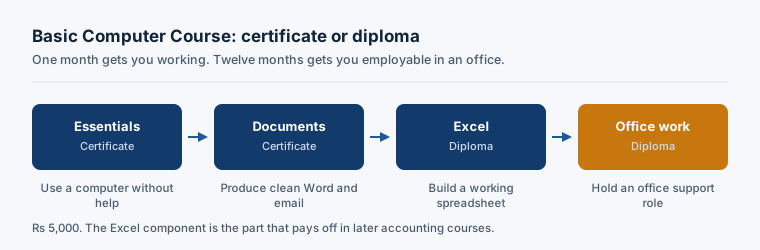
The length decision from Mayur Vihar is best made in journeys rather than in months. A one-month certificate means somewhere around two dozen round trips through Yamuna Bank. A twelve-month diploma means several hundred.
Neither number is prohibitive and plenty of students do the longer one. The point is to choose with the number in front of you. If the interchange is what has been making you hesitate about studying at E-56 at all, the short certificate is the version where that objection almost disappears, and it still leaves you fully equipped for whatever you take next. The course page covers what the foundation includes.
What the Pink Line adds to this catchment
Phase-1 is a Pink Line interchange as well, which widens the catchment considerably. Students who have no direct Blue Line access at all can reach Phase-1 on the Pink Line and cross over there, which makes E-56 reachable from a much larger stretch of the city than the map first suggests.
For anyone in that group the advice is the same and slightly sharper: two changes make the timing question more important, not less. Once the foundation is done, the usual progression is the Tally course, or a broader look at which accounting course fits before committing to a longer programme on this route.
Common questions from Mayur Vihar
How long does the journey actually take?
It depends entirely on the hour and on how long you wait at Yamuna Bank. Time it yourself at your intended batch hours rather than trusting an average.
I have been out of work for years. Will I keep up with the batch?
Yes. Beginners’ batches start from the assumption that nobody has used a computer before, and adults returning after a long gap generally progress quickly once the first week is behind them.
Would studying online save me the change of trains?
It would, and it is a reasonable question to put directly. The trade is that you need your own computer and connection at home, and the self-discipline that a fixed class otherwise supplies.
Which slot should I ask for?
Whichever one keeps you off the interchange at peak. Settle that before the fee conversation, because the wrong timing is what ends courses from this area.