Nirman Vihar is one stop from Laxmi Nagar, close enough that the commute never really features in the conversation. The area is more commercial than residential, with offices along the Vikas Marg corridor and the V3S district centre, and that shows up clearly in who enquires. A large share of GST enquiries from here come from people already sitting in a junior office role, asking about a qualification their job will not hand them.
Handed the filing, never taught the law
The most common Nirman Vihar enquiry comes from someone already doing GST work without having been trained for it. An office junior gets the portal login because somebody has to upload the invoices, and the instruction stops there. It works until something fails to reconcile.
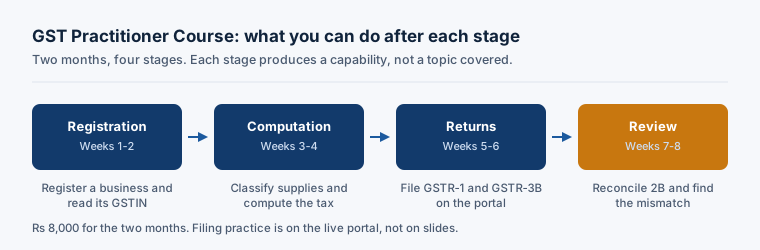
That is a specific gap, and it is narrower than a career change. These callers do not need to be told what a return is. They need to know why the figure on the portal is not the figure in the purchase register, and what to do about it before the deadline arrives. Two months of structured coverage, with practice on the live portal rather than on slides, is aimed squarely at that.
Input tax credit is where untrained filing goes wrong
When an office job goes wrong on GST, it usually goes wrong on credit rather than on output tax. Sales are easy to total. Credit depends on what the supplier has done, whether the invoice appears where it should, and whether the conditions for claiming it are actually satisfied.
A junior who has only been shown the upload screen will claim what the books say and discover later that the portal disagrees. Knowing the rules governing input tax credit is the difference between filing and filing defensibly, and it is precisely the part nobody explains on the job. The same applies to the monthly summary return, which our guide to filing GSTR-3B covers step by step.
Who it suits in Nirman Vihar, and who it does not
It suits someone already in an accounts or back-office role on this corridor who wants the reasoning behind a task they currently perform mechanically.
It suits a working person who can only commit two months, since the journey from here is a single stop and the course is short enough to sit inside a busy year.
It does not suit you if the promotion you are aiming at is into full accounts responsibility. GST is one function of a finance department, not the department.
It does not suit you if your employer’s tax work is mostly TDS and income tax, which happens often enough in office roles here. In that case the Diploma in Taxation Law, three months at Rs 20,000 covering direct and indirect tax, answers more of the job than this course does.
Common questions from Nirman Vihar
Can I do this while working full time on Vikas Marg?
That is the usual pattern from this area. Ask for the current batch timings first and pick the one that survives your actual office hours, not the one that looks workable on paper.
Will my employer pay for it?
Some do, particularly when the person is already handling filings. Since no figure is printed here, request one on enquiry, get it in writing, and take it to your employer with the batch dates attached.
Does a certificate change my title at work?
Not by itself. What tends to change things is becoming the person in the office who can explain a mismatch, and the certificate is evidence you set out to learn that deliberately.
Is two months enough if I have no commerce degree?
You do not need a B.Com to enrol. Two months is enough to file competently; what it will not do is replace the accounting background that makes the numbers meaningful.