The institute is at E-56, a few minutes from Laxmi Nagar Metro Station, so for most people enquiring from this area there is no journey to plan around. What Laxmi Nagar asks about instead is the market on the other side of the door. This is one of the densest concentrations of small traders, wholesalers and professional offices in East Delhi, and almost every one of those businesses has a GST number attached to it.
GST work here repeats every month
Demand for GST skills in Laxmi Nagar renews on a monthly cycle rather than an annual one, and that is the fact that makes it a local trade rather than a seasonal errand. A registered trader files again in a few weeks, and whoever handled last month’s return is usually the person who handles the next one without anybody reopening the conversation.
For someone weighing two months of study, that changes what the training buys. You are not learning to complete a project. You are learning a recurring obligation attached to every GSTIN on these streets, which is why people who file accurately in this market tend to accumulate clients quietly rather than chase them. Our walk-through of filing GSTR-1 shows the shape of a single month of that work.
Owners who want to stop paying for something they could do
Business owners handling their own compliance make up a bigger share of GST enquiries in Laxmi Nagar than in the areas further out along the Blue Line, and their reason is rarely a change of career. A trader who pays a consultant every month to press buttons on a portal eventually wants to know what the buttons do, and what happens when one of them is pressed late.
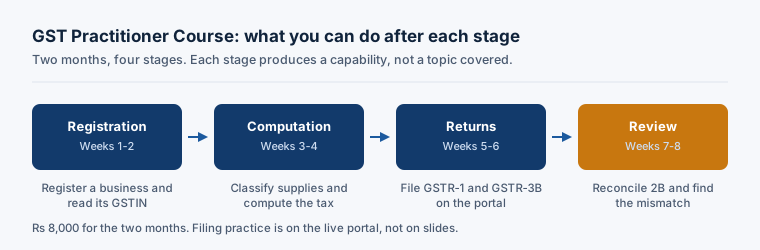
Two months is a realistic answer to that, partly because the filing practice runs on the live GST portal rather than on slides. An owner does not need a description of a return. They need to log in during the filing week and not guess. Whether it is worth doing yourself afterwards depends on your volume, and that is an honest calculation rather than a sales one: a business raising a hundred invoices a month is a different case from one raising six.
Who it fits here, and who it does not
- It fits a trader, wholesaler or family business owner who wants control of one recurring compliance job instead of outsourcing it indefinitely.
- It fits junior staff in the accounting and consultancy offices around here, where GST filing is the work that arrives in volume.
- It does not fit you if the gap is bookkeeping rather than tax. Returns are built on ledgers, and someone who can file but cannot maintain books will stall quickly.
- It does not fit you if you want to handle income tax, TDS and GST for the same client. The Diploma in Taxation Law runs three months at Rs 20,000 and covers direct tax alongside indirect, while this course is indirect tax only. The side-by-side comparison sets out the difference.
Common questions from Laxmi Nagar
I run a shop here. Can I attend without shutting it?
Ask which batch suits your trading hours before you decide anything else. Timings vary by intake, so get the current ones rather than assuming an evening slot exists.
What does the course cost?
The fee for this course is not published. It is shared on enquiry, so ask for the current figure in writing along with the batch dates, and compare it against the courses that do publish a fee before committing.
Will two months make me employable in the offices around here?
It gives you filing ability and portal practice, which is what those offices delegate first. It does not give you experience, and most employers here will still start you on supervised work.
Should I learn Tally before this?
Not necessarily, though the two sit together in practice. If your books are already in software, GST entries in Tally covers where the two meet.