Karkardooma is three stops from Laxmi Nagar on the Blue Line, and it is the one area on this list whose occupational character changes what people come to study. The courts complex and the district centre around it support a dense population of advocates, tax practitioners and the clerical staff who keep those offices running. Tax enquiries from Karkardooma come disproportionately from people who already work next to the subject without being qualified in it.
In a practitioner’s office, GST is the volume work
Inside a small tax practice, GST is the part of the workload that arrives every month for every client, and it is therefore the part that gets delegated furthest down the desk. The senior handles the notice. The clerk handles the filings, in bulk, against a deadline that does not move.
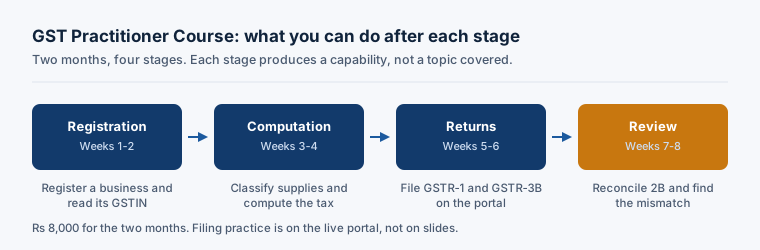
That is why GST enquiries from this area sound different from general ones. The caller is not asking what GST is. They are asking to understand the thing they already process: why a client’s credit was disallowed, what the reverse charge entry was for, how to reconcile before uploading rather than after. Two months of structured coverage with live portal practice matches that gap closely, and the input tax credit rules are usually where the conversation starts.
What this course will not cover for a courts job
It is worth being blunt about the limits, because the courts complex generates work a filing qualification does not reach. Appeals, litigation, representation before authorities and the argument-building that goes with all three are not part of two months on returns.
Neither is direct tax. Assessments and income tax notices make up a large share of what passes across desks here, and this course is indirect tax only. If your desk touches both sides, the course is a partial answer by design, which is better known before enrolling than discovered afterwards.
Who it suits in Karkardooma, and who it does not
It suits a practitioner’s clerk or assistant who wants to own the GST side of the office properly rather than process it blindly.
It suits an LLB student who wants a commercial skill that pairs with the degree, and who wants it in two months rather than three.
It does not suit you if the whole desk is what you are after. The Diploma in Taxation Law runs three months at Rs 20,000 and covers direct as well as indirect tax, which describes far more of the work in these offices than GST alone.
It does not suit you if you want to move from clerical work into full accounts, since tax practice sits on top of books rather than replacing them.
Common questions from Karkardooma
I already file returns for my employer’s clients. Is this too basic?
That depends on whether you understand the returns or only produce them. People in your position generally find the computation and credit sections useful and move through the introductory material quickly.
Does it help with departmental notices?
Only indirectly. Correct filing prevents a share of notices from arriving, but handling one that has already arrived is practice rather than syllabus.
Which is better for an LLB student, this or the diploma?
The diploma if you want tax as a field, this course if you want GST specifically and quickly. Start with the return filing guide to see whether the level of detail suits you.
Three stops each way for two months. Is there an alternative?
Ask about studying online. The portal work is identical from any machine, and for a short course that is a reasonable trade when the journey is the only obstacle.