Three stops down the Blue Line from Karkardooma, the course sits in a different kind of area from the one it serves. The courts complex and the district centre around it hold an unusually concentrated professional population: advocates, tax practitioners, small-practice chartered accountants, and the clerks and assistants who keep those offices running day to day. Tally enquiries from Karkardooma come overwhelmingly from that last group.
In a practitioner’s office, the return is the last step
A filing is the visible end of a process that starts much earlier. Before anything reaches a portal, somebody has taken a client’s invoices, bank statements and vouchers and turned them into a set of books, and in almost every small practice those books live in Tally.
This produces a particular kind of employee around the courts. Someone who has learned the filing sequence by repetition, knows which documents are needed and when, and cannot independently open a client file and post an entry. They are fluent at the end of the process and dependent at the start of it, which caps both what they can be given and what they can charge for.
Two months of structured software practice addresses exactly that cap. It is not a career change for this audience. It is the missing layer beneath work they already handle.
Tally on its own, or Tally inside a tax qualification
People in this area reasonably ask whether to do this or the longer taxation route. The distinction is about which half you are missing.
If you understand what a client owes and why, but cannot produce the books that prove it, the software is your gap and two months closes it. If you can keep books competently but do not know why a provision applies, then the Diploma in Taxation Law is the correct answer and a software course will not substitute for it. Many people around the courts complex eventually take both, usually in the order their current job demands.
Who this suits in Karkardooma, and who it does not
It suits a practitioner’s clerk or office assistant who wants to handle client books rather than only client paperwork.
It suits a small practice wanting a junior trained on the software rather than trained by attrition on live client data.
It does not suit you if your gap is tax law itself. Software will not teach you why a notice was issued.
It does not suit anyone intending to specialise in indirect tax compliance, where the GST Practitioner Course covers registration, returns and the portal work directly.
Common questions from Karkardooma
I already handle filings. Is the software worth two months?
If you cannot currently build the books that the filing rests on, yes. That dependency is what keeps clerical staff clerical, and it is a two-month problem rather than a year-long one.
Our office keeps client books. Will this let me take that work on?
It gives you the capability. Whether your office hands it over is a separate matter, though being able to demonstrate it changes the odds considerably.
How much accounting do I need before this makes sense?
Enough to know what a debit and a credit are doing. People who work around tax practice usually have more of that than they credit themselves with.
Does it cover the GST side inside the software?
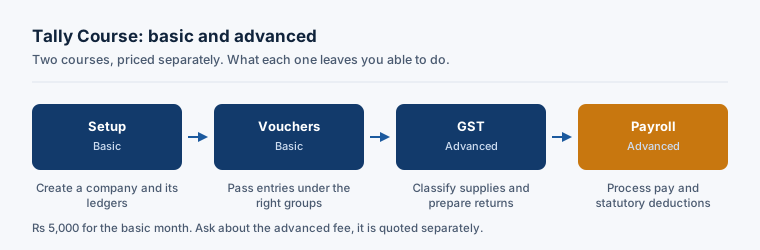
Tax handling within Tally is part of what the course works through, and how GST entries are recorded in Tally sets out what that looks like in practice.